



Yes, the same dog can serve as both an emotional support animal (ESA) and a service dog. However, to qualify as a service dog under the ADA, it must be individually trained to perform specific tasks related to a person's disability. Simply providing emotional comfort does not qualify a dog as a service animal.
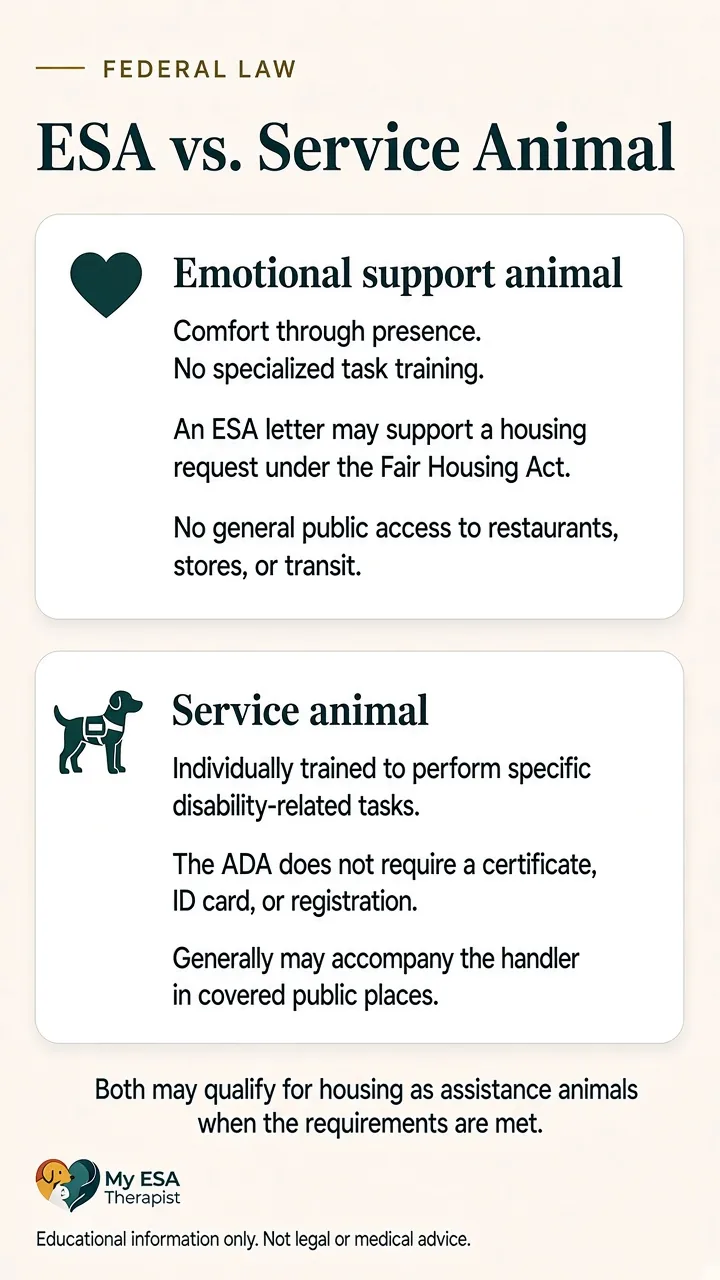
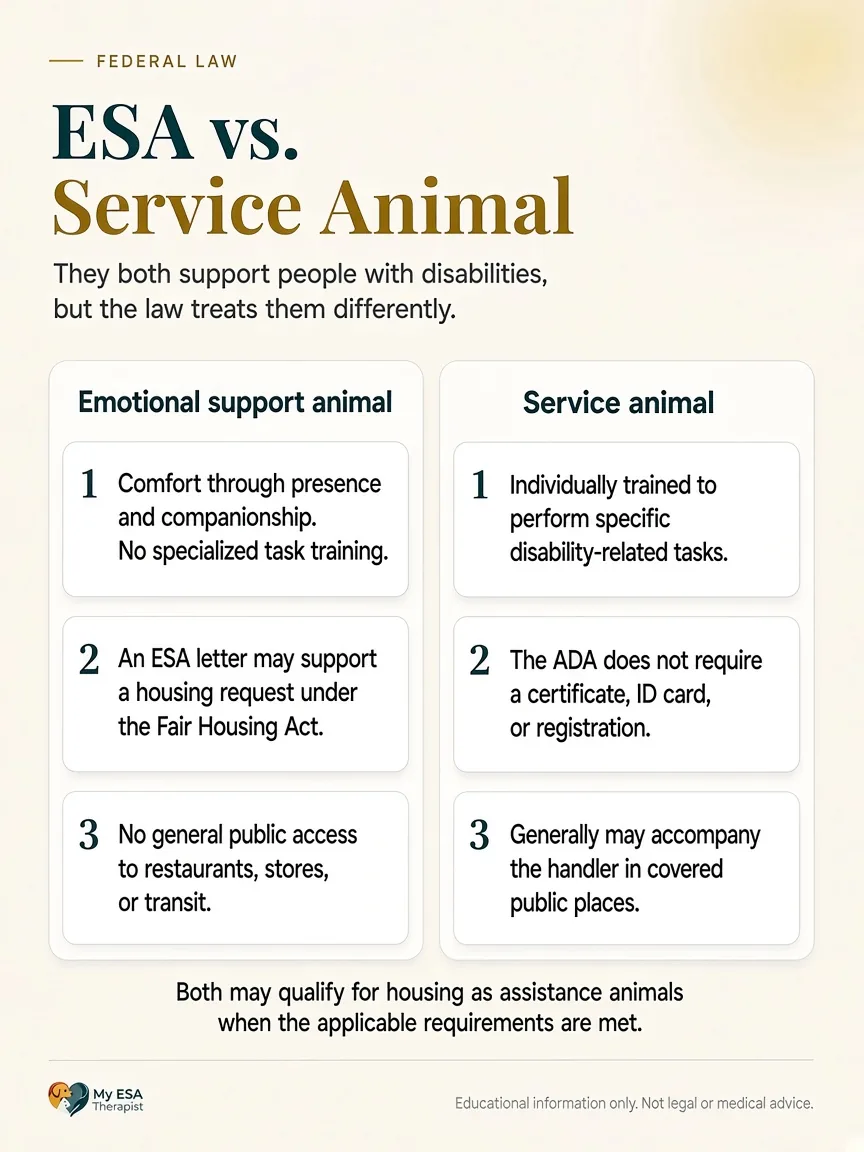
Emotional support animals and service animals both provide support to people with disabilities, but they do so in different ways. An emotional support animal (ESA) offers comfort through its presence and companionship, while a service animal receives specific training to perform tasks that help a person manage their disability.
Knowing the difference between an ESA and a service animal can help you understand what each one does and where they are legally recognized. Their roles, training requirements, housing protections, and public access rights are not the same. Although both can make everyday life easier for people with disabilities, federal law treats them differently.

What Is an Emotional Support Animal?
An emotional support animal (ESA) is an animal that offers emotional comfort and companionship to someone living with a disability. Simply having the animal around may help ease certain disability symptoms and make everyday life a little more manageable. Oftentimes, ESAs are helpful for mental health conditions, such as anxiety, depression, and trauma.
Unlike service dogs, ESAs don't need special training to perform specific tasks for the disabled individual. Their role is to provide emotional support through their presence, which can be helpful for people dealing with certain mental or emotional health conditions. Oftentimes, isolation is a vulnerability factor for those with mental health conditions, so animal companionship can help alleviate this.
People living with conditions such as anxiety disorders, depression, or post-traumatic stress disorder (PTSD) may benefit from an ESA. However, having a diagnosis doesn't automatically mean someone qualifies. A healthcare professional must assess whether the animal provides support related to the person's disability. If the healthcare provider determines an ESA would be beneficial for the disabled individual, they will write an ESA letter. This can act as supporting documentation for ESA accommodations.
ESAs are primarily recognized in housing situations under the Fair Housing Act (FHA). Depending on the circumstances, qualifying individuals may request reasonable accommodation to live with their emotional support animal, even in properties that generally have no-pets policies.
What Is a Service Animal?
A service animal is specially trained to perform tasks that help a person manage a disability. Under the Americans with Disabilities Act (ADA), these tasks must be directly related to the person's condition.
Unlike ESAs, service animals provide practical assistance rather than just emotional comfort. They may help people with physical, sensory, or psychiatric disabilities.
Some common examples include:
- Guiding people with visual impairments in both public and private places.
- Alerting individuals with hearing loss to important sounds, such as sirens or alarms.
- Retrieving medication or essential items for disability management.
- Providing balance and mobility support.
- Alerting handlers to an upcoming seizure or medical event.
- Helping recognize and respond to anxiety attacks or PTSD flashbacks.
Service animals' specialized training allows them to support greater independence in the disabled individual's everyday life.
Emotional Support Animal vs. Service Animal: Training Requirements
One major difference between an ESA and a service animal is training.
Emotional Support Animals
ESAs don't need specialized training or formal certification. Their role is to provide comfort and help ease disability-related symptoms through companionship. Owners are still responsible for their animal's care and behavior. Typically, ESAs do not have public access rights. Just because you have an ESA does not mean you can bring them into public stores or onto public transportation. However, there are some basic obedience commands an ESA should follow.
Service Animals
Service animals must be individually trained to perform specific tasks related to their handler's disability. This may include mobility assistance, recognizing medical episodes, or interrupting certain harmful behaviors.
Under the ADA, handlers can train their own service dogs. Attending a professional training school isn't mandatory. However, the service animal will need to be able to provide specific skills in both public and private settings in order to be considered a service animal. Service animals typically do have public access rights.
ESA Public Access: Where Can Each Animal Go?
Public access rights are another important difference between ESAs and service dogs.
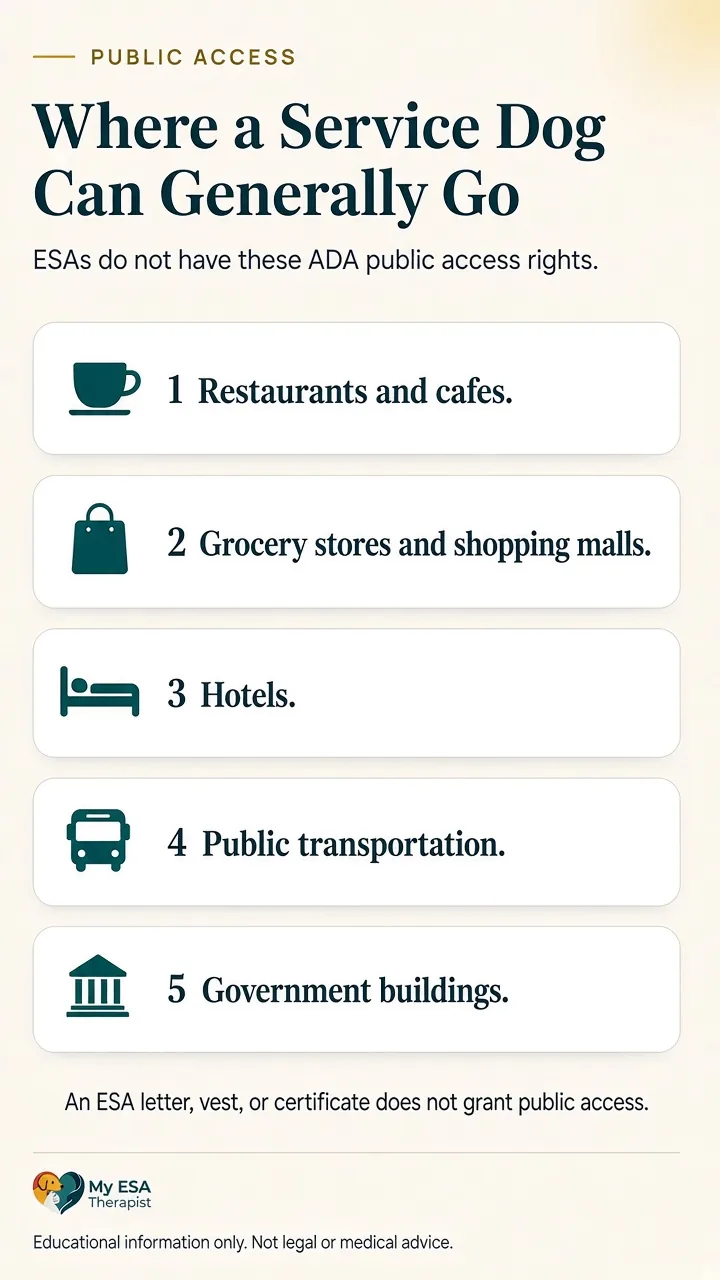
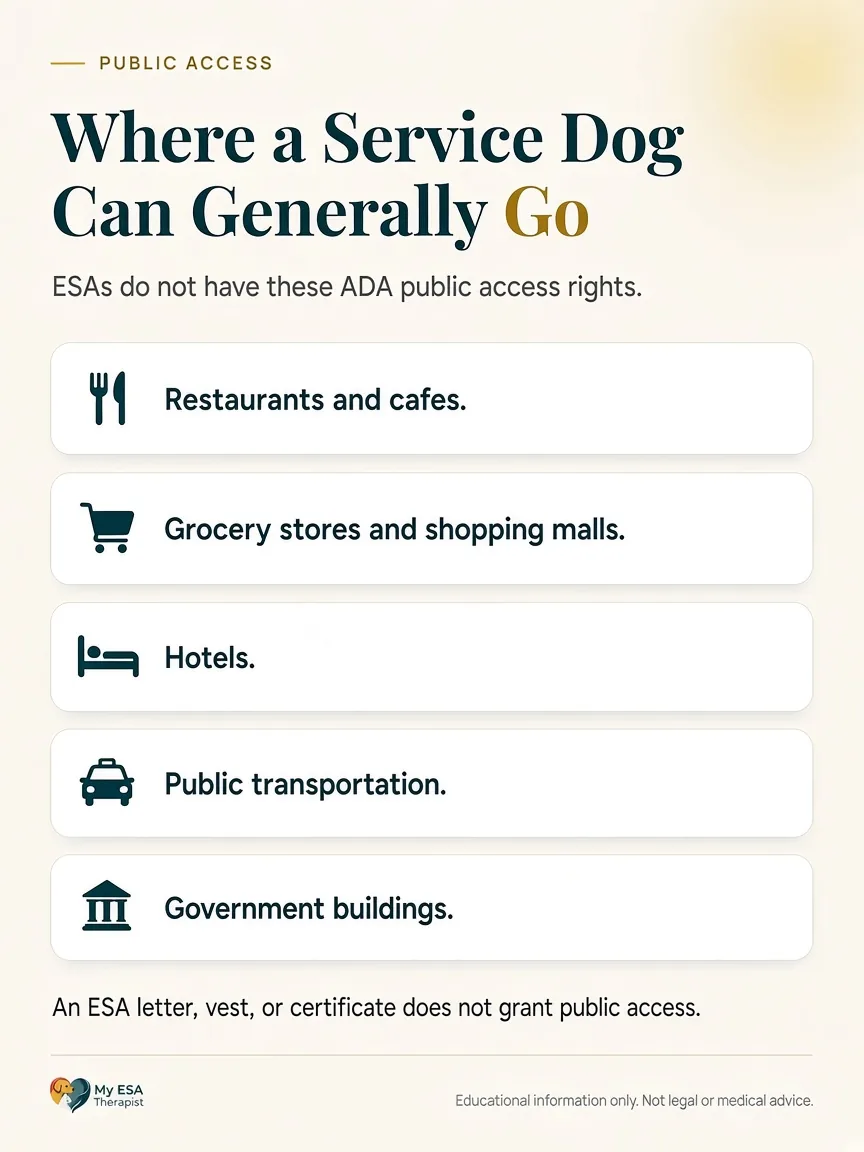
Under the ADA, service dogs can generally accompany their handlers in public places, including:
- Restaurants and cafes.
- Grocery stores and shopping malls.
- Hotels.
- Public transportation.
- Government buildings.
ESAs don't have the same public access rights. An ESA letter doesn't automatically allow an animal into restaurants, stores, or other places that don't allow pets. Furthermore, purchasing an ESA vest, patch, certificate, or other visual identifier does not grant your ESA public access rights.
Some state or local laws may offer additional protections, so it's worth checking the rules in your area. Consulting with a local disability rights agency may help grant further information.
Documentation: ESA Letters vs. Service Dog Certification
ESA and service dog documentation requirements aren't the same.
For Emotional Support Animals
An ESA letter issued by a licensed healthcare professional may support a housing accommodation request under the Fair Housing Act (FHA). It should establish the disability-related need for the animal.
Buying an ESA certificate, ID card, or registration number doesn't independently establish eligibility. Instant approval letters and online registries also do not grant ESA accommodation protections.
For Service Dogs
The ADA doesn't require service dogs to have official certificates, ID cards, or registration documents.
If a service dog's role isn't obvious, businesses may ask:
- Is the dog required because of a disability?
- What task has the dog been trained to perform?
They cannot ask about the person's diagnosis or demand a demonstration of the dog's training.
Service Dog Laws: Understanding Your Rights
Different federal laws protect assistance animals in different situations:
- Americans with Disabilities Act (ADA): Provides public access rights to qualifying service dogs.
- Fair Housing Act (FHA): Allows qualifying individuals to request housing accommodations for assistance animals.
- State and Local Laws: May offer additional protections depending on where you live.
Remember, an animal may qualify for housing accommodation under the FHA without having public access rights under the ADA.
Frequently Asked Questions About This ESA Topic
Answers from this article about eligibility, housing, and the evaluation.
01Is an ESA the same as a service animal?
02Can an ESA go everywhere a service dog can?
03Does a service animal need certification?
04Can a service animal help with mental health conditions?
05Can an ESA and a service dog both live in rental housing?

Allyson Valley
I’m a Licensed Professional Counselor (LPC-MHSP), Ph.D. in Counselor Education & Supervision, with over six years of experience leading and delivering care across crisis services, behavioral health programs, and healthcare systems.
See full bioYour Next Step
ESA documentation is issued only after an evaluation by a licensed professional. These pages explain the process and requirements.



- Evaluation by a clinician licensed in your state
- $99, no hidden fees
- Secure, HIPAA-compliant telehealth