
ESA for Anxiety: Eligibility, Benefits, and How to Qualify?

Written by:
Allyson Valley
Licensed Clinical Social Worker

Medically Reviewed by
Max Phillips
MSW, LCSW
Table of Contents
Quick Answer:
Can I Get An ESA Letter If I Have Anxiety?
Yes. Anxiety disorders are recognized in the DSM-5-TR as a mental health condition and may qualify you for an ESA if they significantly affect your daily life. A licensed mental health professional must evaluate your condition and determine whether an ESA can provide meaningful emotional support.
Everybody experiences anxiety differently. When it comes to having an anxiety disorder, some find themselves in a constant state of fear, leading to difficulty concentrating and feeling detached from daily events, even activities they enjoy.
For other people, anxiety might interfere with their daily activities and sleep due to hypervigilance, alarming responses, and physiological arousal. Regardless of how it presents, an anxiety disorder can be debilitating, making it incredibly difficult to participate in and enjoy life.
Many people with anxiety find great emotional support from animals as part of their mental health care plan. When times are difficult, an emotional support animal (ESA) offers stability and consolation.
An ESA can provide emotional support as well as nervous system regulation and may make mental health treatment more effective when combined with a therapist or medication.
Having anxiety just by itself, though, does not automatically qualify someone for an ESA. Whether the animal offers support linked to a diagnosed mental health need and a professional assessment will help to determine an individual’s qualification for an ESA.

Does an Anxiety Disorder Potentially Make Me Eligible for an ESA?
Yes. Anxiety can be a qualifying condition for an emotional support animal when it substantially affects the daily functioning of an individual.
But it is important to note that a qualified mental health practitioner does not just sign an ESA letter based on a diagnosis alone. They consider whether an ESA may offer significant emotional support and how anxiety affects one’s daily life.
During an evaluation, a provider may consider:
- How often anxiety symptoms occur
- Situations that trigger the anxiety response
- Whether anxiety interferes with daily living activities
- Emotional challenges caused by anxiety
- Current coping strategies and treatment history
- How an ESA may support mental well-being, emotion regulation, and physiological arousal
For instance, a person who is experiencing severe anxiety-related distress or panic symptoms may discuss whether an ESA could be a helpful enhancement to their mental health and overall quality of life.
“The consistent companionship of an emotional support animal can be a valuable source of comfort for individuals whose anxiety affects their daily emotional well-being.” – Dr. Robert Staaf, Licensed Clinical Social Worker
How Can an ESA Support People With Anxiety?
The link between human beings and animals has been studied for many years, especially when linked to the stress response and emotional wellness.
While an emotional support animal is not a medical treatment, the relationship between an individual and their animal may offer significant emotional benefits for long-term anxiety management.
A Calming Presence During Stressful Moments
For many ESA owners, an animal’s presence provides reassurance during periods of increased anxiety. In challenging emotional situations, simple interactions like petting an animal or sitting next to them can set up a calming routine. Certain animals may be trained to press against or lie on top of a person’s chest, providing an effect similar to a weighted blanket, and activate the safe and secure vagus nerve response.
Further research shows that nervous systems co-regulate, or attune, to one another. If an animal is calm while their human is anxious, being close to the animal will help relax the human’s nervous system out of fight or flight and back into a safe and secure state.
Encourages Healthy Daily Habits
Anxiety can sometimes make everyday responsibilities feel unmanageable. Animal care creates a structure through regular activities like feeding and keeping routines.
For some people, these small responsibilities can help them feel more connected to their daily lives. Providing support to another living creature can bring personal satisfaction and fulfillment, as well as give greater incentive to leaving the house, socializing with other people, and practicing distress tolerance skills in public.
Provides Consistent Companionship
Supports Emotional Regulation
What Rights Does an ESA Letter Provide?
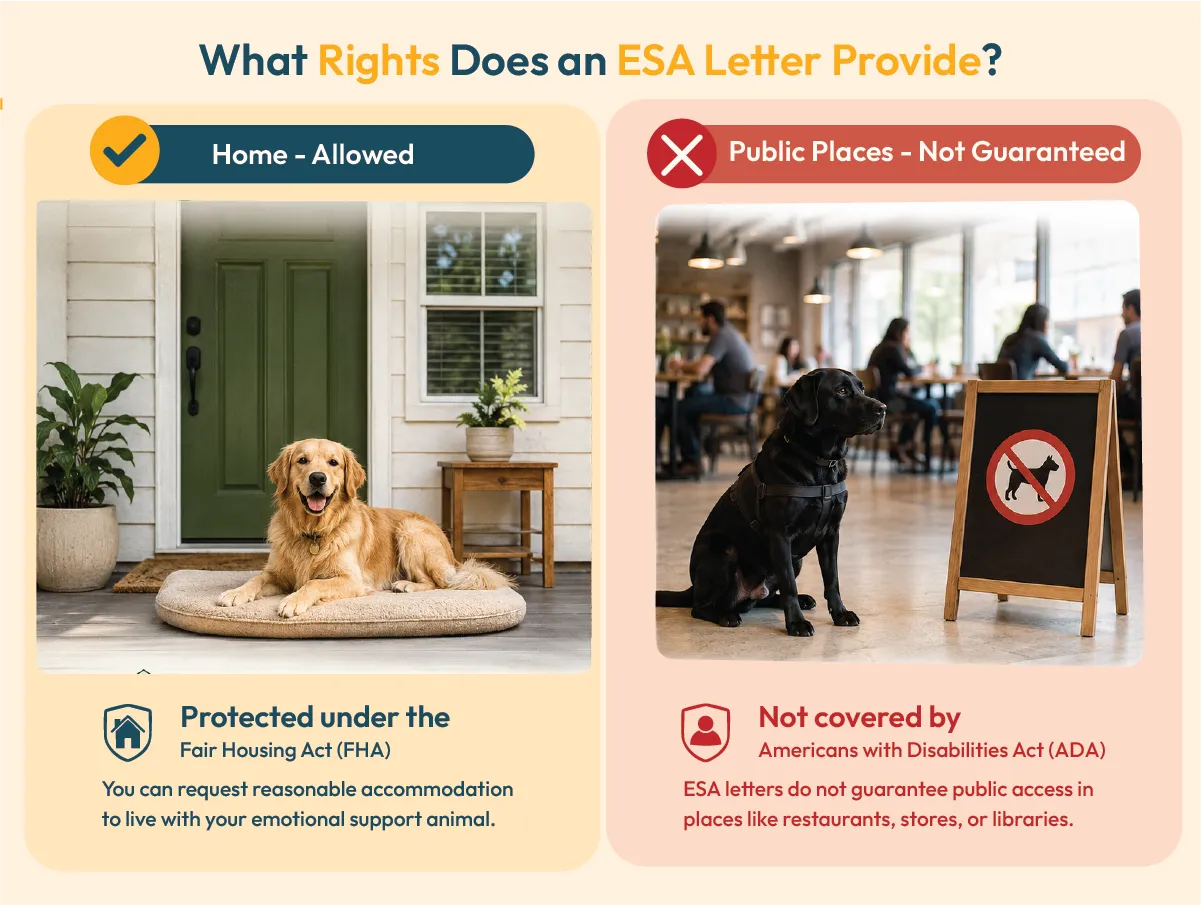
Many people look for ESA paperwork because of issues with their homes. People with qualified impairments may ask for reasonable housing for an emotional support animal under the Fair Housing Act (FHA), even in places with pet restrictions.
An ESA letter for anxiety, though, does not give an animal endless public access privileges. Unlike service animals, ESAs often lack coverage under the Americans with Disabilities Act (ADA) for public access. This means that ESAs do not have guaranteed public access in places such as restaurants, stores, and libraries.
Knowing this difference permits ESA owners to know what safeguards they do and do not have.
Get Evaluated for an ESA Letter for Anxiety
Does an Emotional Support Animal for Anxiety Need Training?
No. Unlike service animals, emotional support animals are not mandated to undergo specialized task training. However, an ESA owner may choose to train their animal to respond in specific ways to different distress presentations.
An ESA should behave properly in its surroundings. Daily life for both the owner and the animal can be made simpler with fundamental training, house rules, and socialization. The ESA must not pose a threat to other people or animals.
A well-behaved ESA is more likely to effectively assist its owner while adhering to local and housing requirements.
How to Choose an ESA for Anxiety Support?
Choosing an emotional support animal should not depend on the size, breed, or color of the animal. The right choice depends on the person’s lifestyle, emotional connection, and ability to provide proper care.
Before choosing an ESA, consider the following pointers:
- Whether you can meet the animal’s needs, including financially
- Your living environment, space for the animal, and safety of residents
- The animal’s temperament, age, health conditions, and demeanor
- Your daily schedule, work routines, and physical activity levels
- The type of companionship you find helpful
A strong bond between an individual and their animal is often the basis of meaningful emotional support.

Final Thoughts
An emotional support animal can provide helpful support to people who struggle with anxiety, but it’s not a quick fix or a replacement for mental health care. The purpose of an ESA evaluation is to understand whether an animal can provide genuine emotional support based on an individual’s specific disability needs.
If anxiety is affecting your quality of life, discussing your situation with a licensed mental health professional can help you understand whether an ESA may be an appropriate option for your mental health journey.
Frequently Asked Questions
Can I Have More Than One ESA For Anxiety?
Can Children With Anxiety Qualify For An ESA?
What Happens During An ESA Evaluation For Anxiety?
Is An ESA Letter Recommended For Everyone With Anxiety?
How Long Does An ESA Letter For Anxiety Stay Valid?
Medical Disclaimer
This article is provided for general educational purposes only. It is not medical, psychological, or legal advice, and it is not intended to diagnose, treat, cure, or prevent any condition. Reading it does not create a provider-patient relationship.
- An ESA is not a medical treatment. An emotional support animal is not a substitute for therapy, medication, or other professional mental health care.
- Anxiety alone does not guarantee eligibility. Only a licensed mental health professional can decide, after a clinical evaluation, whether an ESA is appropriate. Approval is never guaranteed.
- Do not change your care because of this article. Never stop, delay, or adjust any treatment or medication without first speaking with your doctor or therapist.
- Laws can change. ESA letters are valid for housing under the Fair Housing Act and do not grant public access rights. For advice about your situation, consult a qualified professional or attorney.
Need urgent help? If you are in crisis or thinking about harming yourself, call or text 988 (Suicide & Crisis Lifeline, U.S.). For a medical emergency, call 911.
Medically reviewed by Max Phillips, MSW, LCSW. See our Terms of Use and Privacy Policy.
About the Author

More ESA Resources

8 Basic Obedience Commands Every ESA Should Know
Learn the 8 basic obedience commands every emotional support animal should know, from sit and stay to come, leave it, quiet, place, and heel. While ESA training isn’t legally required, these commands can help improve safety, behavior, and everyday life with your ESA.

ESA Letter Sample: What Does a Legitimate ESA Letter Look Like?
This guide provides an ESA...

ESA for Children and Minors: How It Works and Who Signs the Letter?
Learn how children qualify for an emotional support animal, who can sign an ESA letter for minors, and what parents need to know about the evaluation process, housing, and school accommodations.
Make My ESA Therapist a Preferred Source on Google
Liked this article? Add us as a preferred source and see our latest ESA guides, housing rights updates, ESA training tips, and state ESA law news more often in your Google Top Stories.