



Yes, colleges may accept online ESA letters for dorm accommodations if they are issued by a qualified healthcare professional after an individualized evaluation. However, each college has its own documentation and accommodation review process, so check its housing or disability services requirements before submitting your letter.
College is an exciting phase of life, filled with new experiences, academic pressure, and personal adjustments. For students facing mental health challenges, an emotional support animal (ESA) can provide comfort and stability while making daily campus life easier. But living with an ESA in a college dorm involves more than simply bringing an animal along when you move in. Each university has its own housing policies, documentation requirements, and deadlines for ESA applications that students must follow.
An ESA letter for college dorms can make campus life more comfortable by providing emotional support during stressful academic and personal situations. Let's understand the housing rights, documentation, and application steps involved in bringing an emotional support animal to a college dorm.

Can College Students Have an ESA in Dorms?
Yes, college students may be allowed to keep an emotional support animal in their dorm through a reasonable accommodation request. Under the Fair Housing Act (FHA), eligible housing providers are generally required to consider accommodation requests from individuals with disabilities who need an ESA.
This protection may also extend to university-owned dorms and student housing, depending on the specific housing arrangement and applicable state laws. Unlike regular pets, an ESA is considered an assistance animal when it meets the requirements for a disability-related accommodation.
However, getting ESA approval is not automatic. Students must show that they have a qualifying disability and that the animal helps with a related disability need. The university may also ask for supporting documentation before reviewing and approving the ESA request. Students should have a clear understanding of who can write an ESA letter. The university may also have additional requirements to ensure the animal is safe for other students as well as university property.
What are ESA University Policies?
Each college has its own process for reviewing emotional support animal requests in campus housing. Although federal housing laws offer accommodation protection to eligible students, universities also have their own guidelines for handling applications and ensuring a comfortable living environment for everyone.
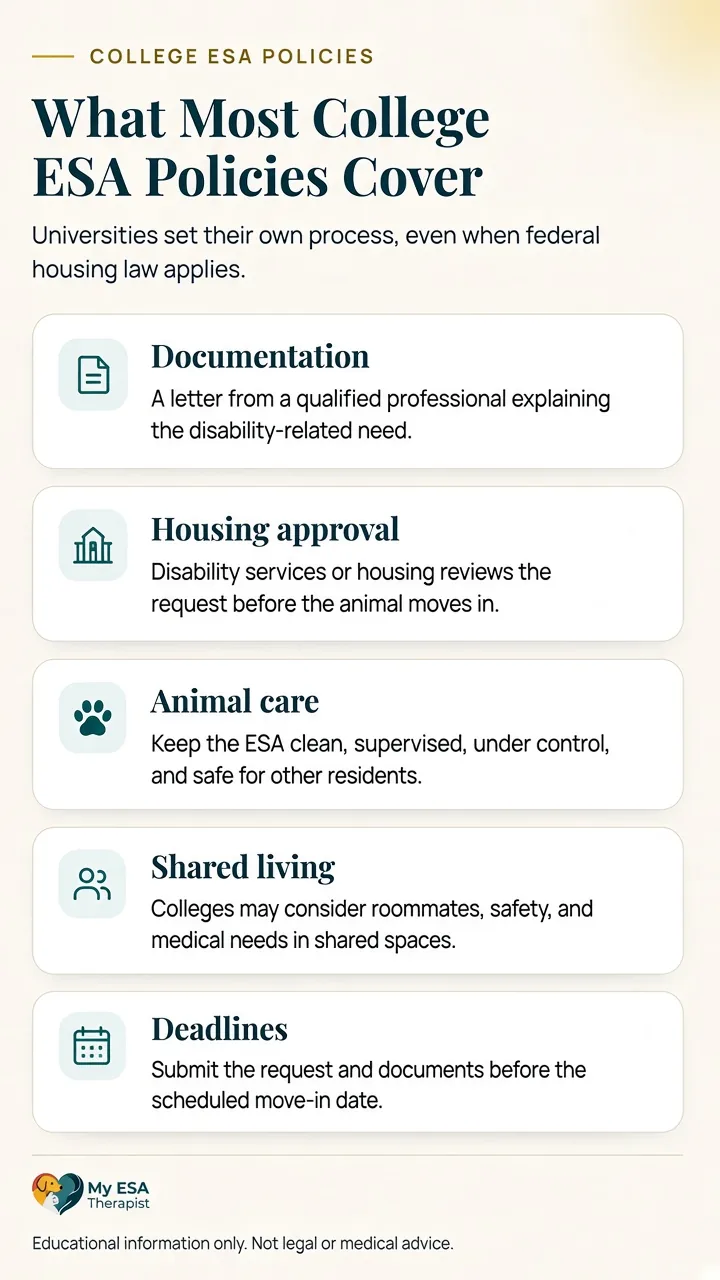
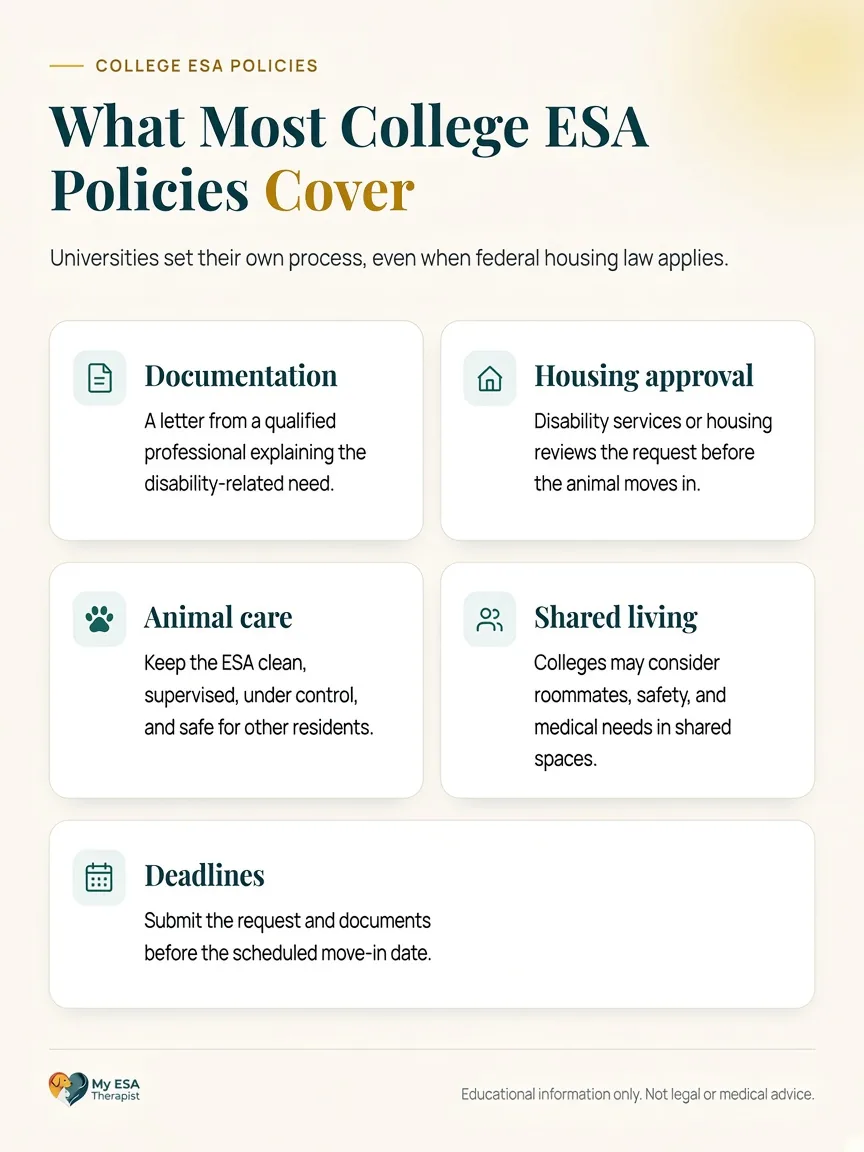
Most college ESA policies cover the following areas:
- Documentation: Students may need to provide supporting information explaining their disability-related need for an emotional support animal, including a letter by a qualified healthcare professional. The individual should have a mental health disability, usually listed in the DSM-5 for ESA eligibility.
- Housing Approval: The college's housing or disability services department reviews the request before allowing an ESA in campus housing.
- Animal Responsibilities: Students are expected to keep their animals clean, properly supervised, and under control. The ESA must be safe for other residents.
- Shared Living Arrangements: Colleges may consider how an ESA could affect roommates and other students using shared residential spaces, including safety and medical considerations.
- Application Deadlines: Students may need to submit their accommodation requests and supporting documents before their scheduled move-in date to the university dorm or apartments.
Before bringing an ESA to campus, check your college's official housing and disability accommodation guidelines. Requirements can vary between universities, so another student's experience or a different college's policy may not apply to your situation. Oftentimes, universities will require students to begin the ESA process and receive approval before the ESA will be allowed on campus.
What Documentation Is Required for an ESA Letter for Dorms?
When requesting an ESA for college dorm housing, your school may ask for documentation to understand your need for an emotional support animal. An ESA letter for ESA dorm accommodation should come from a qualified healthcare professional who understands your situation and can assess your disability and daily living needs.
Depending on the university, the required documentation may include:
- Your demographic details and the healthcare professional's credentials as well as contact information.
- Confirmation of a qualifying physical or mental health condition.
- An explanation of your need for an emotional support animal.
- How the animal helps with your disability-related needs.
You don't usually have to share your complete medical history or every detail of your diagnosis. A qualified mental health professional can help determine whether an ESA is suitable for your circumstances and disclose only the necessary information for the housing provider to make an accommodation determination.
Remember, buying an ESA certificate or vest online does not establish eligibility or guarantee dorm approval. There are no federal, national, or state registries for ESAs.
How to Request an ESA Accommodation in College Housing
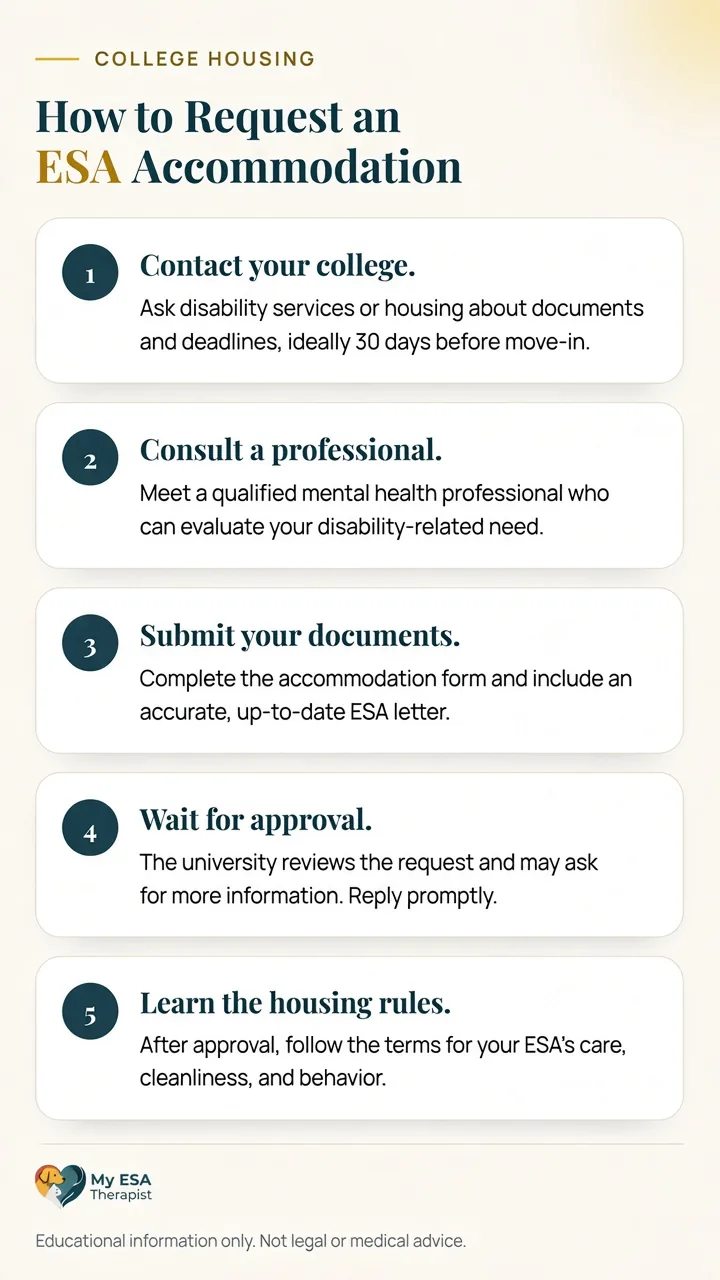
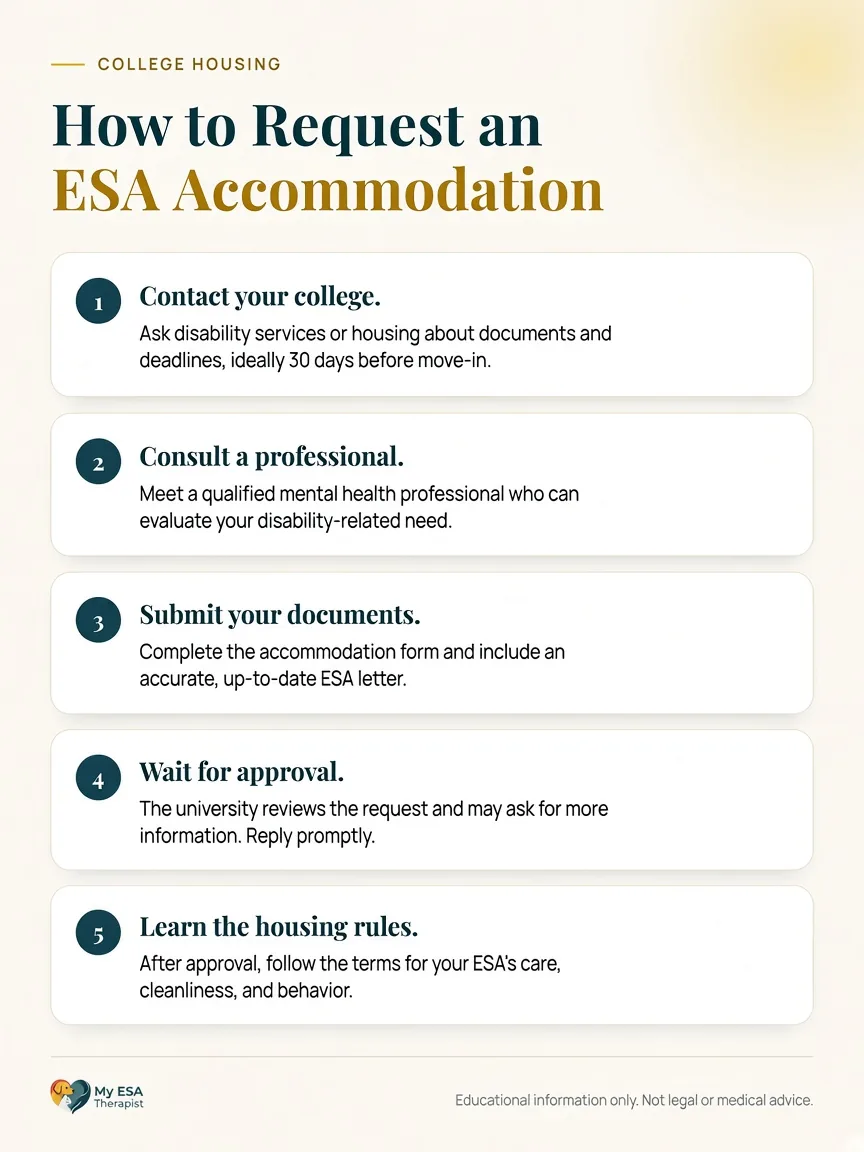
Every college has its own application process, but requesting an ESA in campus housing generally involves a few steps.
Contact Your College
Reach out to the disability services or housing department to understand the ESA application process, required documents, and submission deadlines. Doing this at least 30 days before your move-in date will help set you up for success.
Consult a Mental Health Professional
Schedule an evaluation to speak with a qualified mental health professional who can evaluate your circumstances and determine whether an emotional support animal may help with your disability-related needs.
Submit Your Documents
Complete the college's accommodation form and submit the requested supporting documentation, including your ESA letter. Check that all information is accurate and up to date before submitting.
Wait for Approval
The university will review your application and may contact you if additional information is needed. Respond promptly to university communication to avoid delays.
Understand the Housing Rules
Once approved, review the accommodation terms carefully. Make sure you understand your responsibilities for your ESA's care, cleanliness, and behavior in shared spaces.
Emotional Support Animal Dorm Rules: What Students Should Know
Getting approval for an ESA also comes with certain responsibilities. Colleges may have rules to keep dorms clean, safe, and comfortable for everyone, including students and staff on campus.
Students are generally expected to:
- Keep their animals supervised and under control.
- Maintain cleanliness and clean up after their ESA.
- Prevent behavior that unnecessarily disturbs other residents.
- Provide proper food, water, and veterinary care.
- Follow applicable vaccination and local animal health requirements.
Under the Fair Housing Act (FHA), housing providers generally cannot charge pet fees or deposits for an approved assistance animal. However, students may still be responsible for any damage their ESA causes.
It's also important to understand that an ESA does not have the same public-access rights as a service animal under the Americans with Disabilities Act (ADA). Permission to keep an ESA in campus housing does not automatically allow it in classrooms, libraries, dining halls, or other campus facilities. Your university disability office will be able to provide more information on regulations and restrictions in university-owned property.
Frequently Asked Questions About This ESA Topic
Answers from this article about eligibility, housing, and the evaluation.
01Can a college deny an ESA request?
02Do college students need an ESA letter for dorm accommodation?
03Can I bring my ESA to college without prior approval?
04Are students with an ESA required to pay pet fees?
05What happens if my ESA letter expires during the semester?

Allyson Valley
I’m a Licensed Professional Counselor (LPC-MHSP), Ph.D. in Counselor Education & Supervision, with over six years of experience leading and delivering care across crisis services, behavioral health programs, and healthcare systems.
See full bioYour Next Step
ESA documentation is issued only after an evaluation by a licensed professional. These pages explain the process and requirements.



- Evaluation by a clinician licensed in your state
- $99, no hidden fees
- Secure, HIPAA-compliant telehealth