
8 Basic Obedience Commands Every ESA Should Know.

Written by:
Allyson Valley
Licensed Clinical Social Worker

Medically Reviewed by
Max Phillips
MSW, LCSW
Table of Contents
Quick Answer:
Is Training Mandatory for an Emotional Support Animal?
An ESA can do something no pill or therapy session fully covers: it sits with you, literally, when anxiety or panic hits. There’s no rule saying your ESA has to complete task training the way a service animal does; but skipping training altogether isn’t really doing your animal any favors either.
An ESA that knows a few basic commands is easier to have around, easier to take places, and honestly more useful in the moments where you are in distress. These recommended eight commands cover what matters the most.
What Commands Should an ESA Know?
Teaching an ESA basic commands can make day-to-day routines safer and easier to manage.
These 8 commands can help your emotional support animal respond to you at home, outdoors, or in front of your guests.
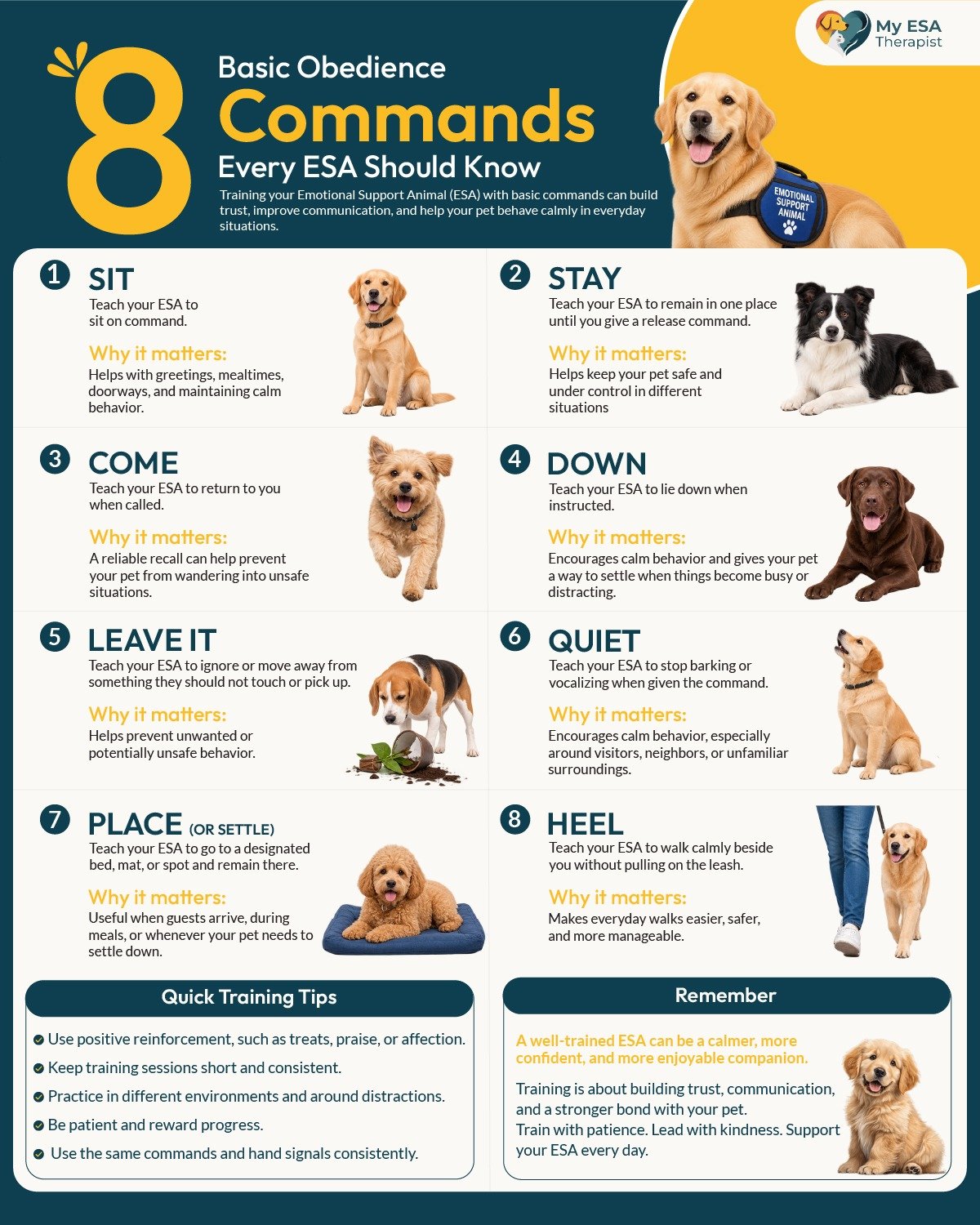
1. Sit
2. Stay
3. Come
4. Down
5. Leave It
6. Quiet
7. Place (or Settle)
8. Heel
Why Training Matters For An ESA?
An ESA helps just by being present, but that only works if the animal itself is calm. A dog that drags you down the street or won’t stop barking adds stress instead of relieving it. Training builds the kind of communication that makes the ESA bond actually work.
There’s a practical angle too; ESAs don’t carry the same public access rights service animals do, but plenty of housing situations, a few airlines, and most therapy offices still expect an animal that behaves. Trained animals are just easier to bring along.
How to Train Your ESA Effectively?
Short sessions work better than long ones, five or ten minutes is plenty. Stick to treats and praise rather than punishment as correction. Don’t just train at home either, an animal that listens in your living room might ignore you completely in a parking lot. Give it time. Some animals pick things up fast, some don’t, and stress can slow the process down further.
If it feels like too much to train your ESA on your own, then a certified trainer or behaviorist can put together a plan built around your animal specifically.
Ready to Take the Next Step?
So, What Makes a Well-Trained ESA?
A well-trained ESA should be calm, responsive, and manageable in everyday situations. It should reliably follow basic commands such as sit, stay, come, down, leave it, quiet, place, and heel, especially around guests, other animals, and unfamiliar environments. These 8 basic commands make daily life with an ESA noticeably easier at home, out running errands, or dealing with housing situations.
Once your ESA can adhere to these basic commands, it is important to note that you should have a valid document stating that your pet is an emotional support animal. Here is where legitimate ESA letter providers come into play. My ESA Therapist connects you with licensed mental health professionals for a secure, online mental health evaluation so that you can stay with your emotional support animal in your rental housing without any hassles.
Frequently Asked Questions
Does An ESA Need To Be Trained Like A Service Animal?
How Long Should I Train My ESA Each Day?
What Are The Most Important Commands For An ESA?
Should I Hire A Professional To Train My ESA?
Can Training Make An ESA More Helpful During Stressful Situations?
About the Author

More ESA Resources

Which DSM-5 Conditions Qualify for an ESA? A Condition-by-Condition Guide
Wondering which DSM-5 conditions may qualify someone for an Emotional Support Animal (ESA)? This condition-by-condition guide explains how mental health diagnoses relate to ESA eligibility, what licensed mental health professionals consider during evaluations, and common misconceptions about qualifying conditions.

How to Verify If an ESA Letter Is Legitimate: A Landlord & Tenant Checklist.
Not all ESA letters are valid. Use this landlord and tenant checklist to verify ESA documentation, identify warning signs of fraudulent letters, and understand what makes an ESA letter legitimate.

HUD ESA Guidance 2026: What Changed for Emotional Support Animal Housing?
HUD’s ESA housing guidance continues to shape how emotional support animal accommodation requests are handled. Discover what has changed, what remains the same, and what tenants and housing providers should know.